
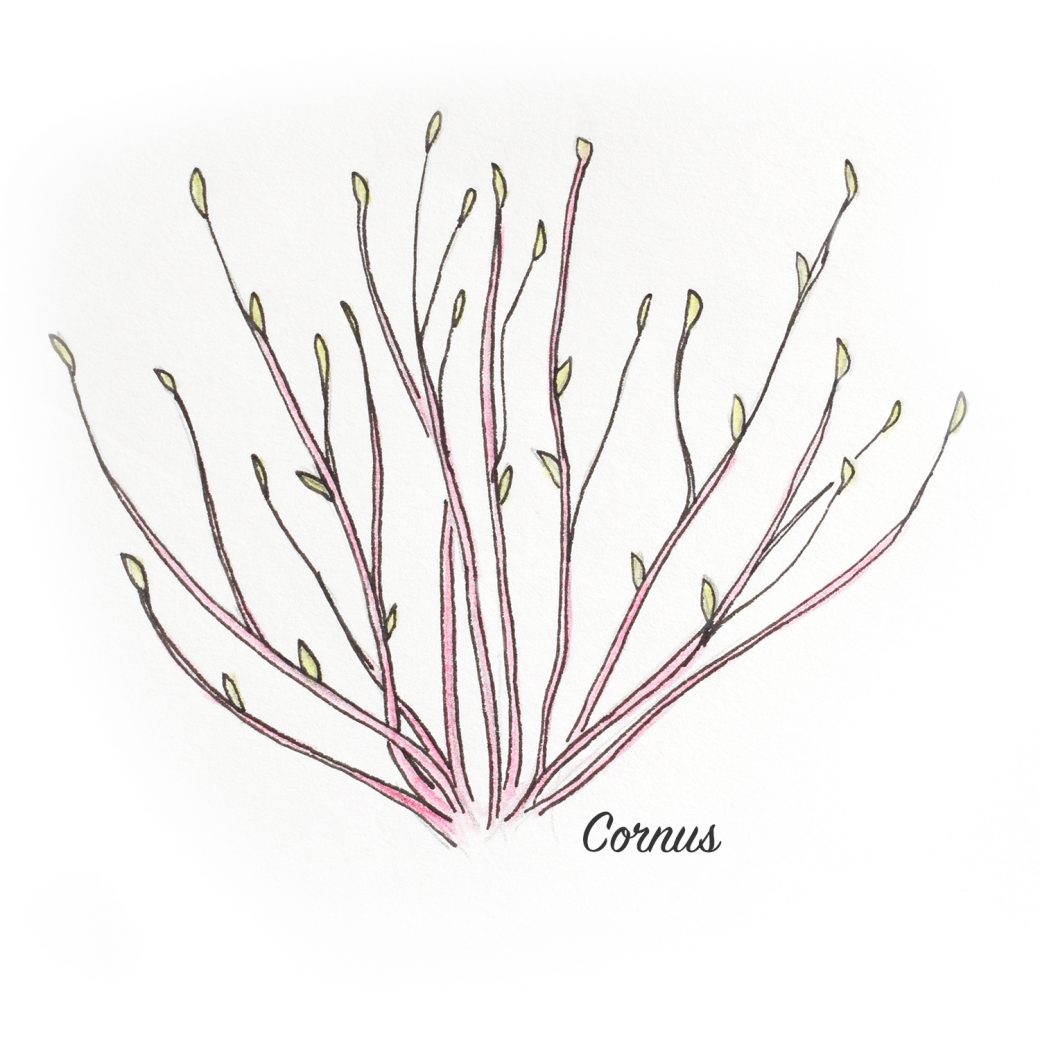
Either in the brightest cherry red or sharpest of lime greens the naked stems of cornus are the perfect cheery remedy to the patchy foliage of a garden in slumber and rain-soaked fences.
Cornus (common name dogwood) are a large genus of woody plants. I have a particularly soft spot for the larger varieties – cornus mas – that grow as multi stemmed, vase-shaped trees many covered in beautiful oversized bracts. I strongly recommend that you pop along to Sir Harold Hilliers Garden to see some of these fabulous beauties.
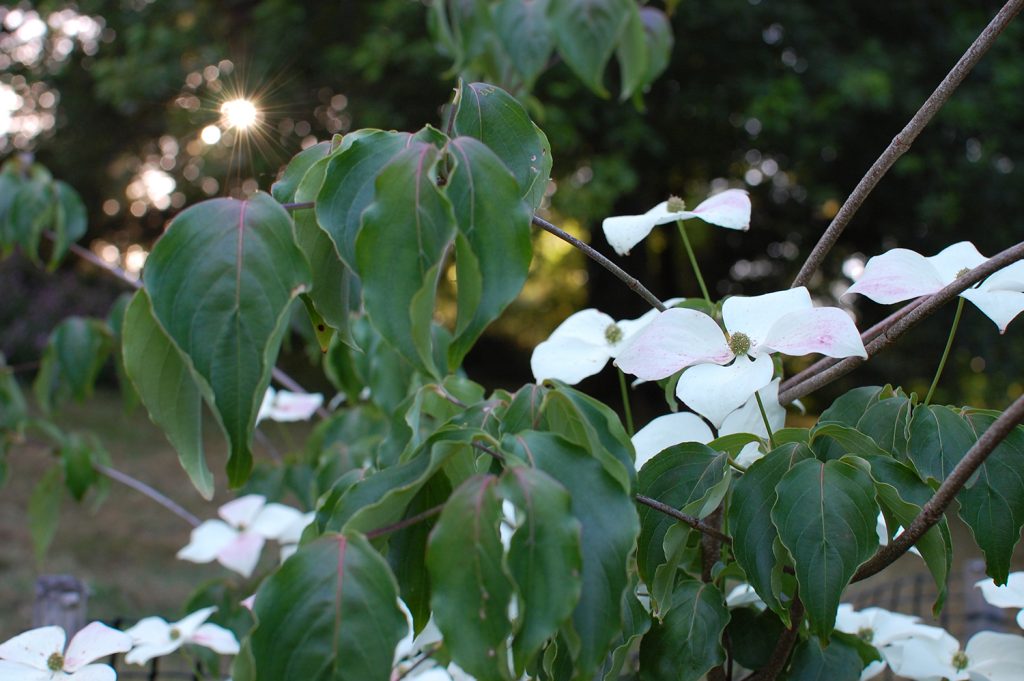
However, this post is about the winter stars of the garden. The varieties of cornus with bright decorative stems that have such an impact in the bleakest part of the year.
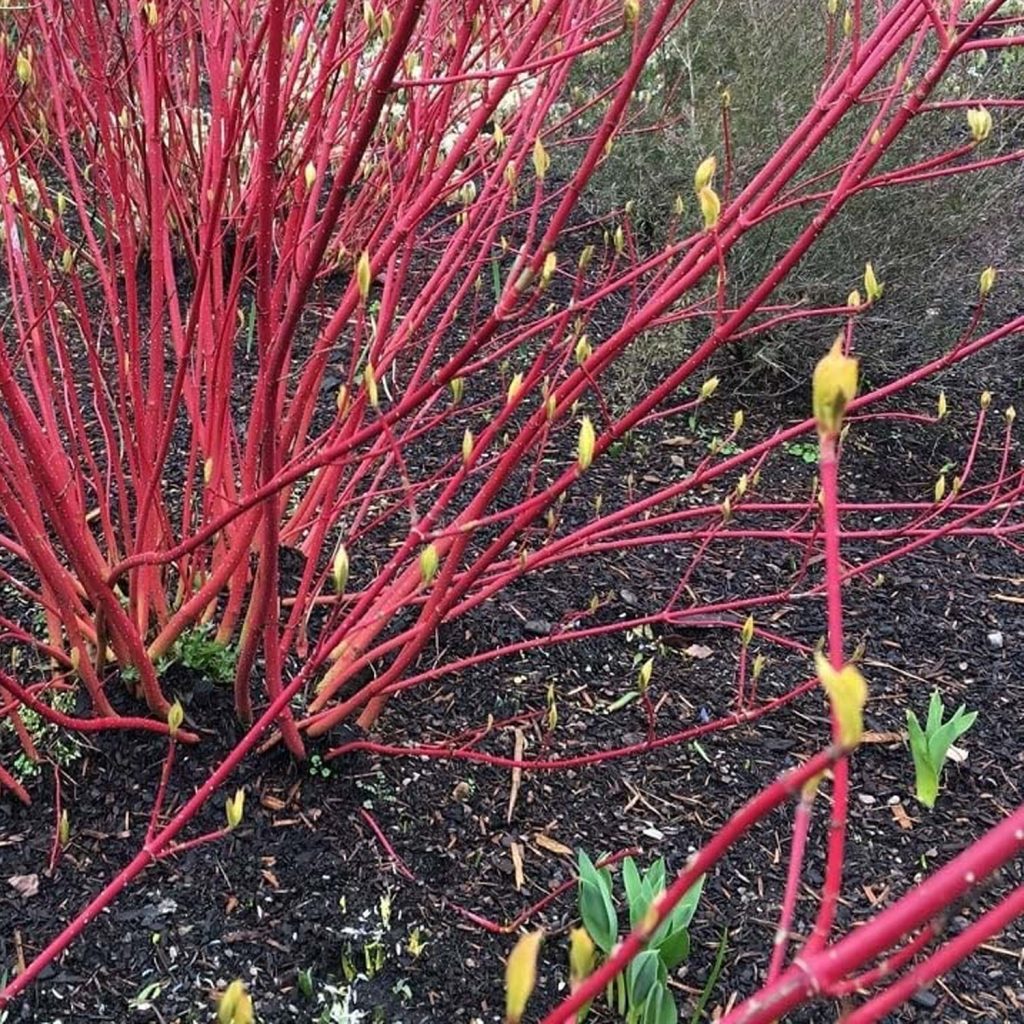
Our native dogwood Cornus sanguinea is an important hedgerow plant with small berries called dog berries and good autumn colour but it is the varieties that have been bred for their coloured stems that can be so impactful in the garden. In the image above you can see some bulbs just poking their heads up from the ground and the buds of the foliage on the Cornus alba adding another layer of zesty interest to the spring scene.
I’m about to buy Cornus alba ‘sibirica’ for my garden here at Renga Design HQ as we have black painted fences and when I looked out at the garden across a recent, and indeed rare, snowfall it struck me that the bright red of the cornus would be a bold addition in the winter while providing soft floppy foliage in the summer which supports my preference for the informal style.
I’m buying the plants as ‘bare root’ which means that they are sent with no soil.. This is the best way to buy woody plants such as hedging plants and trees. Bare root plants are only available during the dormant season (oct-feb). When they arrive you need to make sure that they don’t dry out before you plant them. Although they are planted outside of the growing season it is important not to plant during particularly heavy rain or in freezing conditions.

Cornus sericea ‘flaviramea’ deserves a special mention. I was introduced to this variety at horicultural college and it is gorgeous. It has the most vivid lime-green stems. It can be combined with the red and orange stemmed varieties but is an elegant plant in its own right.
For the brightly coloured stems prune hard in spring. This gives time for new stems to grow up through the summer and put on a good show the following winter.